
-
6-in-1 Foldable Trauma Shears (Black)
Regular price $34.99 USDRegular price$47.49 USDSale price $34.99 USDSale -
6-in-1 Foldable Trauma Shears (Carbon)
Regular price $39.99 USDRegular price$57.49 USDSale price $39.99 USDSale -
6-in-1 Foldable Trauma Shears - Carbon Black (Luminous)
Regular price $39.99 USDRegular price$57.49 USDSale price $39.99 USDSale -
6-in-1 Foldable Trauma Shears (Purple Luminous)
Regular price $39.99 USDRegular price$57.49 USDSale price $39.99 USDSold out -
6-in-1 Foldable Trauma Shears (Purple)
Regular price $34.99 USDRegular price$47.49 USDSale price $34.99 USDSale -
6-in-1 Foldable Trauma Shears (Orange and Black)
Regular price $34.99 USDRegular price$47.49 USDSale price $34.99 USDSold out -
6-in-1 Foldable Trauma Shears (Core Colors 4-Pack)
Regular price $117.99 USDRegular price$144.96 USDSale price $117.99 USDSale -
6-in-1 Foldable Trauma Shears (Purple Duo)
Regular price $63.99 USDRegular price$74.98 USDSale price $63.99 USDSale -
6-in-1 Foldable Trauma Shears (Carbon Duo)
Regular price $63.99 USDRegular price$74.98 USDSale price $63.99 USDSale -
6-in-1 Foldable Trauma Shears (Orange)
Regular price $34.99 USDRegular price$47.49 USDSale price $34.99 USDSale

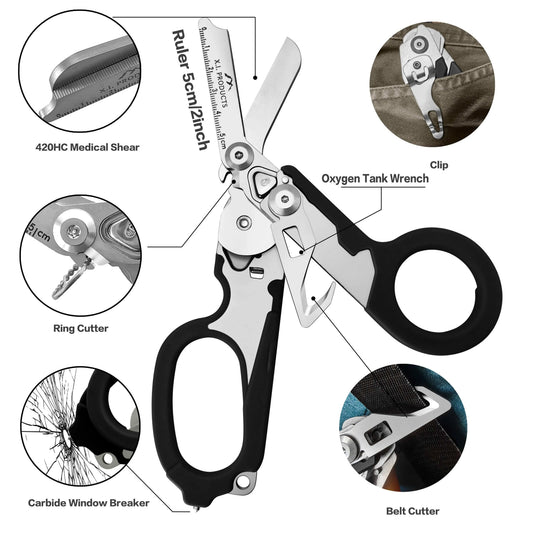

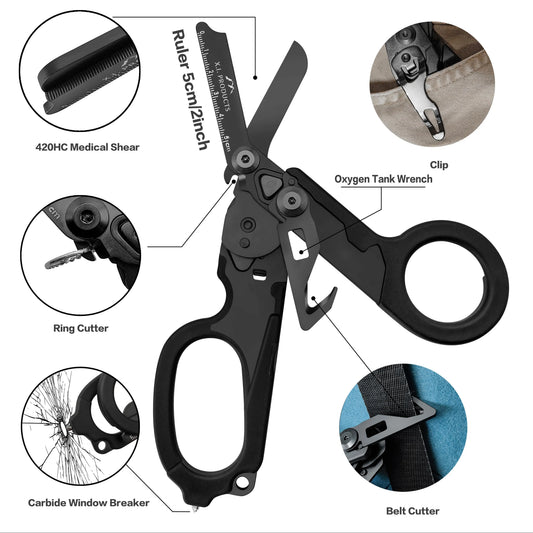

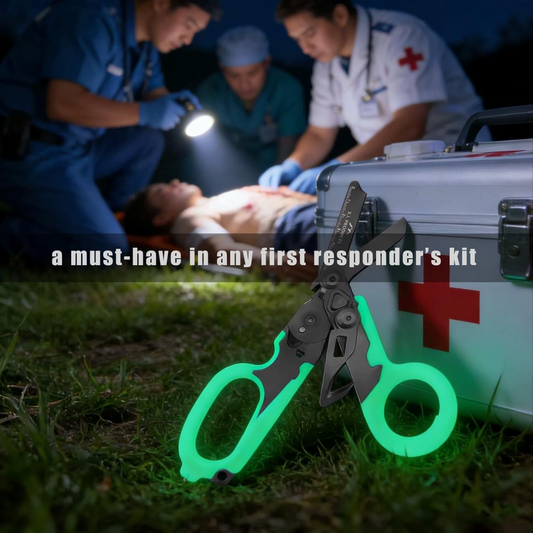

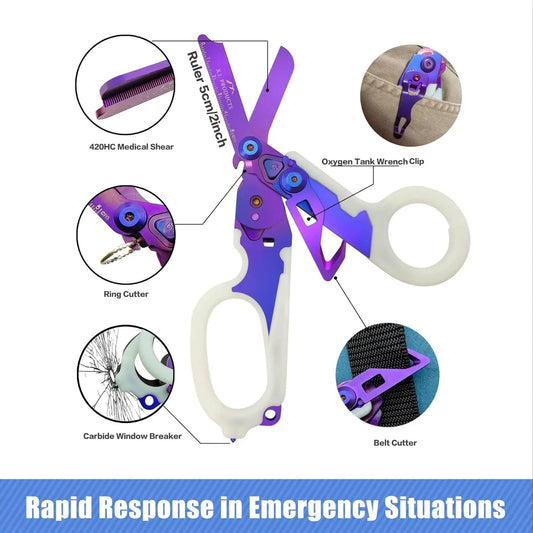


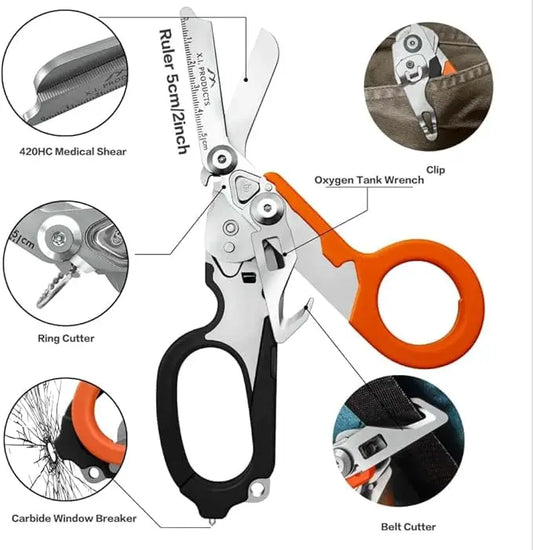


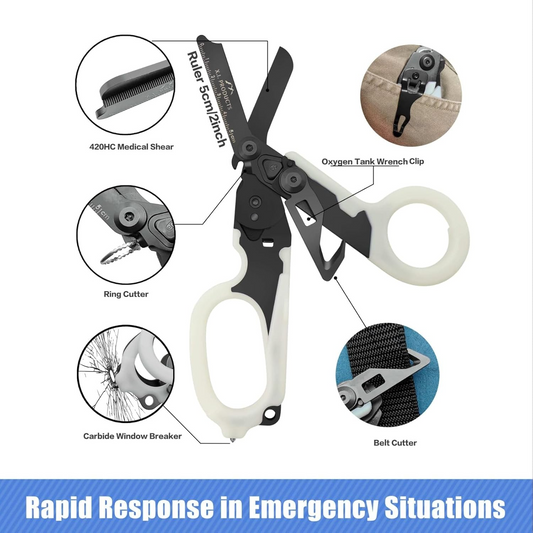

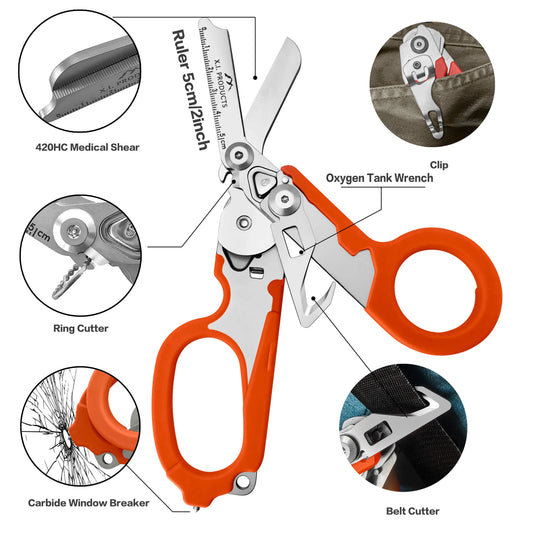
Floor nursing puts different demands on your scissors than any other clinical setting. You're cutting bandages and tape in tight spaces, trimming dressings with one hand while the other holds a patient, and doing all of it shift after shift without time to stop and fuss with a blade that doesn't cooperate.
Our nursing shears and bandage scissors are built around that reality. Lightweight enough that you stop noticing them in your pocket, sharp enough to cut cleanly through tape, gauze, and wound dressings on the first pass, and precise enough for the close work that wound care actually demands.
Non-stick coatings on the blades prevent adhesive buildup so you're not prying bandage tape off mid-cut. Comfortable handles keep things controlled even during long dressing-change rounds. And the price means you can keep a spare pair in every scrubs pocket without a second thought.
Browse the full collection below — bandage scissors, Lister scissors, utility shears, and specialty nursing scissors, all clinical-grade and fairly priced.
What Makes a Good Nursing Scissors
Nurses cut constantly — tape, dressings, sutures, packaging, bandages. The scissors that earn a permanent spot in the pocket are the ones that never make the job harder than it needs to be.
- Sharp from the start, sharp after months — stainless-steel blades that hold their edge through repeated use and regular cleaning.
- Non-stick coating — prevents adhesive and residue buildup from tape and bandage materials so cuts stay clean shift after shift.
- Lightweight design — comfortable in the pocket and in the hand for long shifts; heavy scissors cause fatigue.
- Blunt or safety tip — essential for working close to skin; sharp-tipped scissors have no place in wound care.
- Easy to clean — smooth surfaces and accessible pivot points that respond to disinfectant wipes without trapping debris.
Types of Nursing Scissors in This Collection
| Type | Best use | Key feature |
|---|---|---|
| Bandage scissors (Lister) | Removing bandages, dressings, and tape | Angled blade and blunt lower tip for safe skin-side cutting |
| Utility nurse shears | General floor cutting throughout a shift | Multipurpose design, comfortable for all-day carry |
| Suture scissors | Suture removal and fine wound work | Small, precise tip for controlled close-in cuts |
| Non-stick coated scissors | Tape-heavy dressing changes | PTFE coating resists adhesive buildup |
| Disposable / single-use | Infection-control settings | Eliminates sterilization requirement; per-patient use |
Who Uses Nursing Shears
- Floor and med-surg nurses — use bandage scissors and utility shears dozens of times per shift for dressing changes, tape removal, and general cutting.
- Wound care specialists — need precise, fine-tip scissors for debridement dressings and suture removal alongside standard bandage shears.
- ER nurses — often double as trauma shear users; need scissors that handle both clinical precision and emergency clothing removal.
- Home health and long-term care nurses — carry everything in a single bag; lightweight, multipurpose shears matter most.
- Nursing students — building their first clinical kit; professional-grade tools at a fair price for school and first placements.
