
-
6-in-1 Foldable Trauma Shears (Black)
Regular price $34.99 USDRegular price$47.49 USDSale price $34.99 USDSale -
6-in-1 Foldable Trauma Shears (Carbon)
Regular price $39.99 USDRegular price$57.49 USDSale price $39.99 USDSale -
6-in-1 Foldable Trauma Shears - Carbon Black (Luminous)
Regular price $39.99 USDRegular price$57.49 USDSale price $39.99 USDSale -
6-in-1 Foldable Trauma Shears (Purple Luminous)
Regular price $39.99 USDRegular price$57.49 USDSale price $39.99 USDSold out -
6-in-1 Foldable Trauma Shears (Purple)
Regular price $34.99 USDRegular price$47.49 USDSale price $34.99 USDSale -
6-in-1 Foldable Trauma Shears (Orange and Black)
Regular price $34.99 USDRegular price$47.49 USDSale price $34.99 USDSold out -
6-in-1 Foldable Trauma Shears (Core Colors 4-Pack)
Regular price $117.99 USDRegular price$144.96 USDSale price $117.99 USDSale -
6-in-1 Foldable Trauma Shears (Purple Duo)
Regular price $63.99 USDRegular price$74.98 USDSale price $63.99 USDSale -
6-in-1 Foldable Trauma Shears (Carbon Duo)
Regular price $63.99 USDRegular price$74.98 USDSale price $63.99 USDSale -
6-in-1 Foldable Trauma Shears (Orange)
Regular price $34.99 USDRegular price$47.49 USDSale price $34.99 USDSale

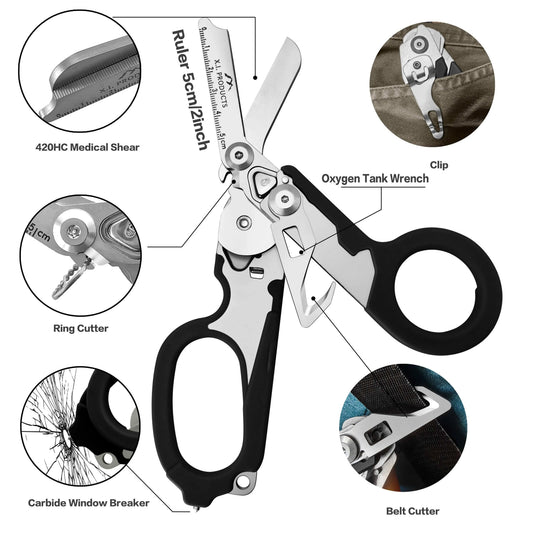

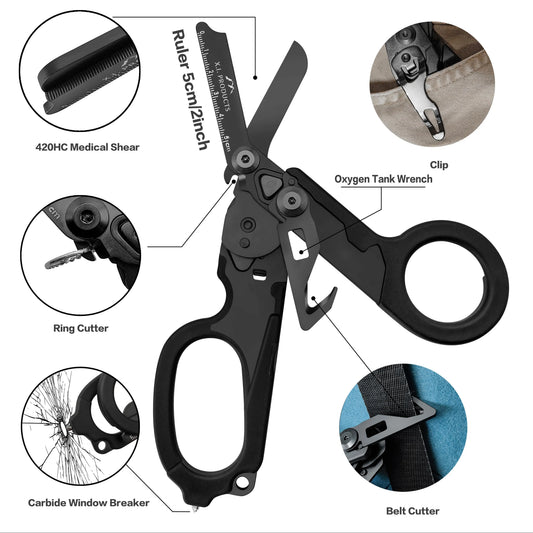

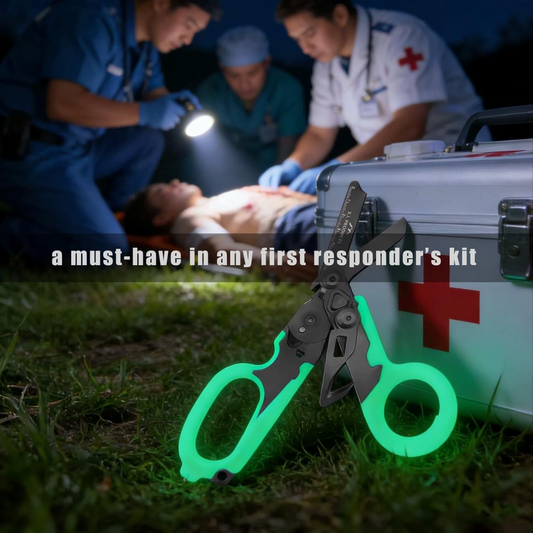

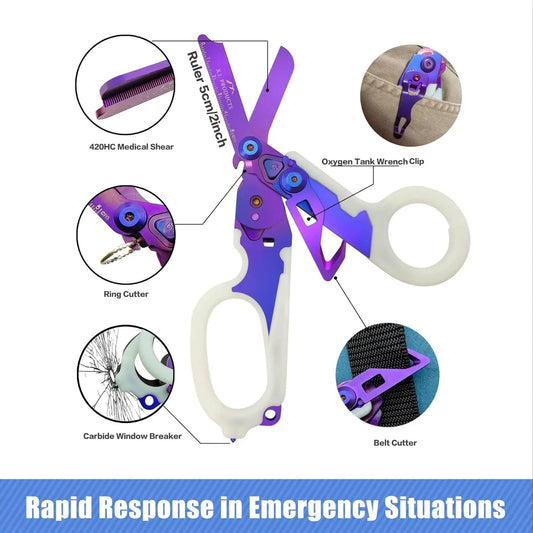


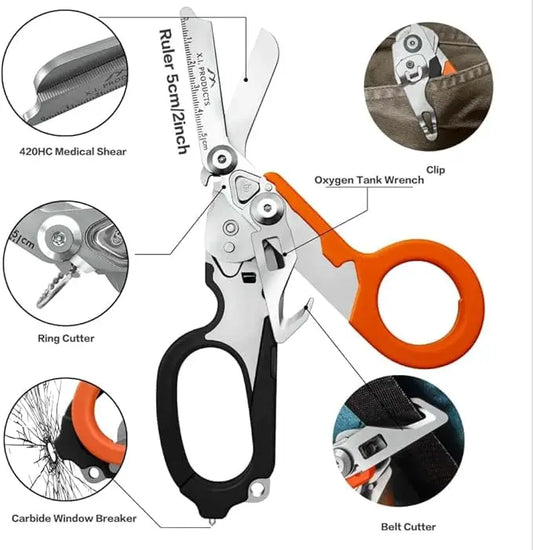


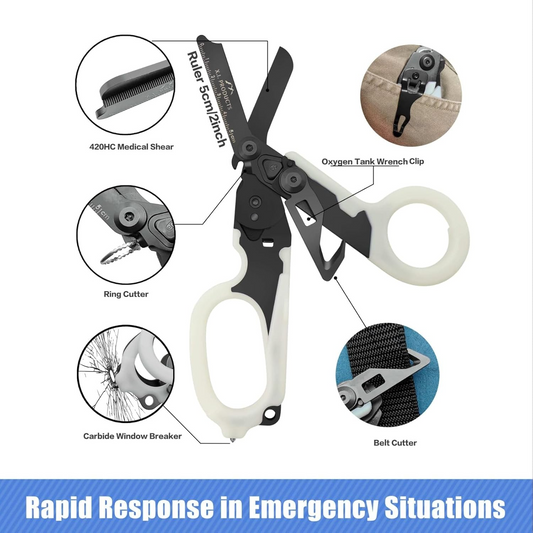

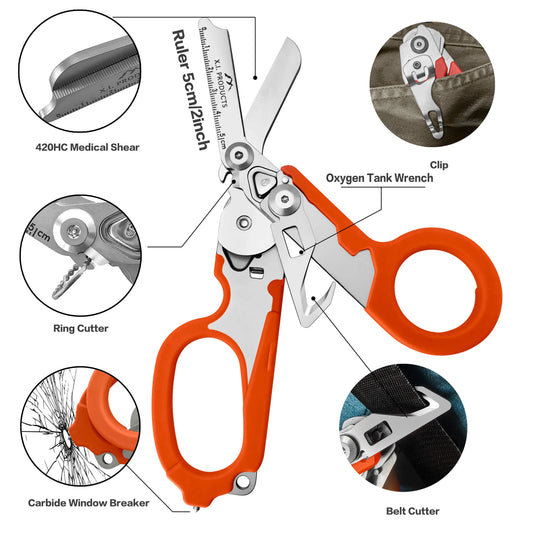
Every clinical environment has one thing in common: the tools that stay in use are the ones you can trust without thinking about them. Our medical scissors and surgical shears are built to that standard — precision stainless steel, clean action on every cut, and a grip that stays secure whether your hands are dry, gloved, or wet.
From bandage scissors and nurse shears to surgical-style suture scissors and wound-care trimmers, this collection covers the full range of what nurses, EMTs, wound-care specialists, and clinical staff actually reach for across a shift. Each pair is selected for accuracy, durability, and real-world comfort — not just a polished product photo.
Clinical-grade quality doesn't have to mean clinical-grade pricing. Browse the full collection below and find the pair that belongs in your kit.
What "Clinical-Grade" Actually Means
The term gets used loosely. For us it means three specific things: the steel is hardened enough to hold its edge through repeated use and sterilization cycles, the pivot is tight enough that blades don't wobble mid-cut, and the tip and blade geometry are matched to the task so cuts are clean and controlled rather than torn or ragged.
For wound care and clinical environments, that precision matters. A blade that skips or skates doesn't just waste time — it can compromise a dressing change, snag a suture, or nick tissue. Getting the cut right the first time is the whole point.
Types of Medical Scissors in This Collection
Different clinical tasks call for different blade shapes, tip styles, and cutting angles. Here's how the main types break down.
| Type | Best for | Key feature |
|---|---|---|
| Bandage scissors | Removing bandages, dressings, tape | Angled blade and blunt tip to protect skin |
| Trauma shears | Rapid clothing and gear removal | Heavy-duty blades for thick materials |
| Suture scissors | Cutting and removing sutures | Fine tip for precise, close work |
| Iris scissors | Delicate wound care and tissue work | Very fine blades, curved or straight |
| Operating / mayo scissors | General surgical and procedure use | Robust build, variety of tip styles |
| Nurse shears / utility scissors | General clinical cutting across a shift | Multipurpose design with comfortable grip |
Who These Are Built For
Medical scissors serve a wide range of clinical and field roles. The right pair depends on your setting, your tasks, and how much you carry through a shift.
- Nurses and RNs — use bandage scissors and utility shears constantly; comfort and durability are non-negotiable.
- EMTs and paramedics — need trauma shears that cut fast through clothing and gear in the field.
- Wound care and clinical specialists — require fine, precise scissors for dressing changes, suture removal, and tissue work.
- Surgical and procedure techs — rely on accurate, sterilizable instruments with predictable cutting action.
- Home health and long-term care — benefit from lightweight, easy-to-clean scissors for regular wound and dressing management.
