
-
6-in-1 Foldable Trauma Shears (Black)
Regular price $34.99 USDRegular price$47.49 USDSale price $34.99 USDSale -
6-in-1 Foldable Trauma Shears (Carbon)
Regular price $39.99 USDRegular price$57.49 USDSale price $39.99 USDSale -
6-in-1 Foldable Trauma Shears - Carbon Black (Luminous)
Regular price $39.99 USDRegular price$57.49 USDSale price $39.99 USDSale -
6-in-1 Foldable Trauma Shears (Purple Luminous)
Regular price $39.99 USDRegular price$57.49 USDSale price $39.99 USDSold out -
6-in-1 Foldable Trauma Shears (Purple)
Regular price $34.99 USDRegular price$47.49 USDSale price $34.99 USDSale -
6-in-1 Foldable Trauma Shears (Orange and Black)
Regular price $34.99 USDRegular price$47.49 USDSale price $34.99 USDSold out -
6-in-1 Foldable Trauma Shears (Core Colors 4-Pack)
Regular price $117.99 USDRegular price$144.96 USDSale price $117.99 USDSale -
6-in-1 Foldable Trauma Shears (Purple Duo)
Regular price $63.99 USDRegular price$74.98 USDSale price $63.99 USDSale -
6-in-1 Foldable Trauma Shears (Carbon Duo)
Regular price $63.99 USDRegular price$74.98 USDSale price $63.99 USDSale -
6-in-1 Foldable Trauma Shears (Orange)
Regular price $34.99 USDRegular price$47.49 USDSale price $34.99 USDSale

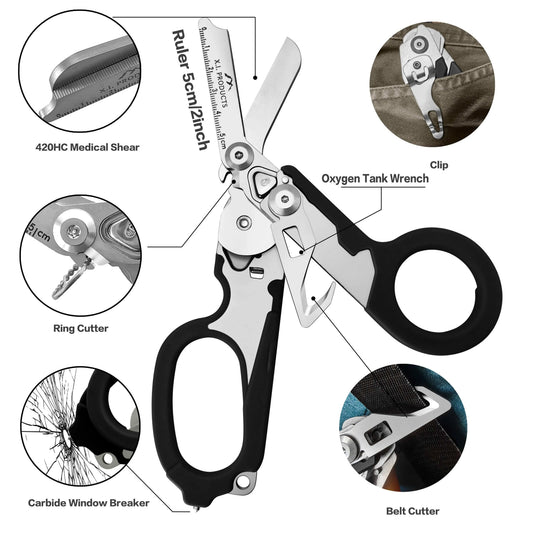

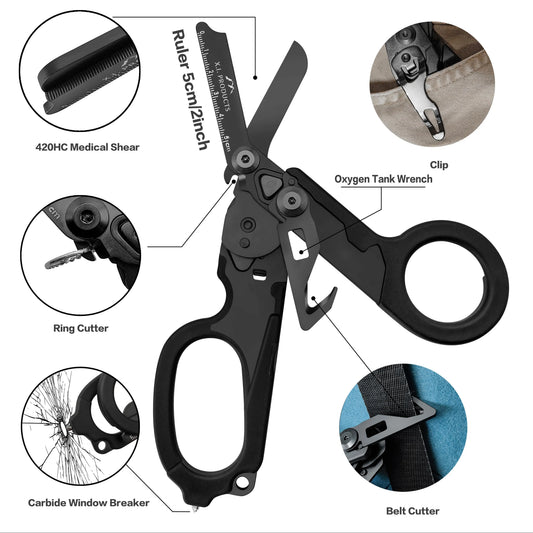

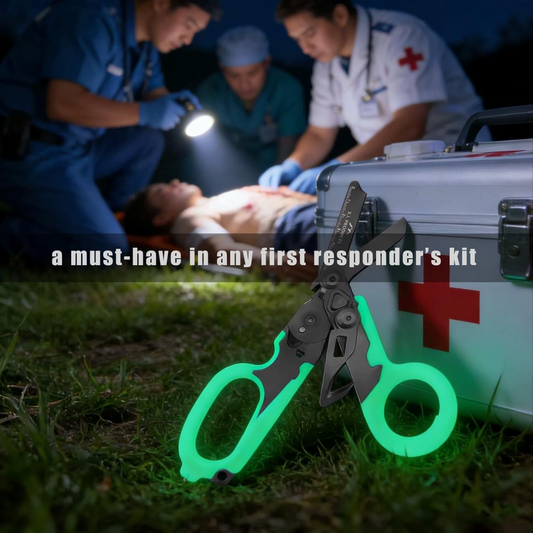

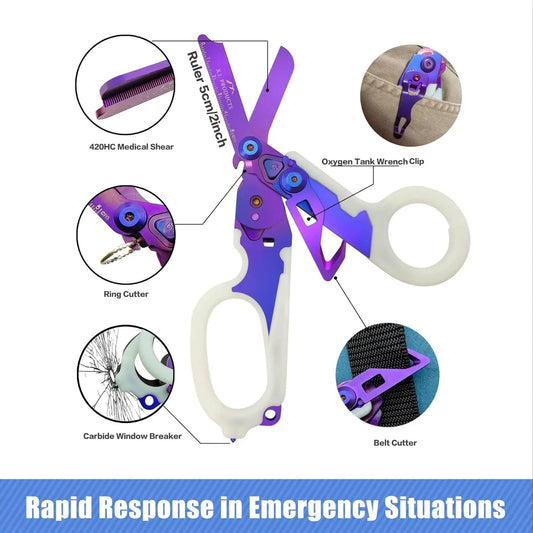


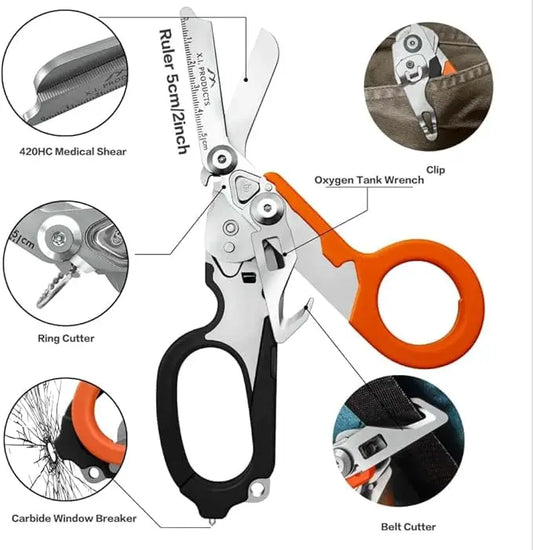


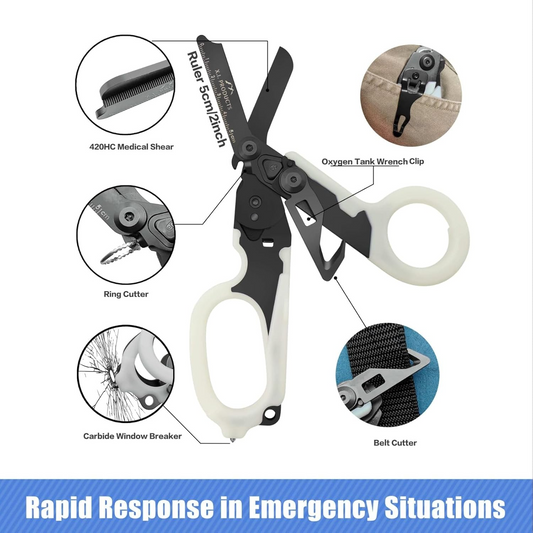

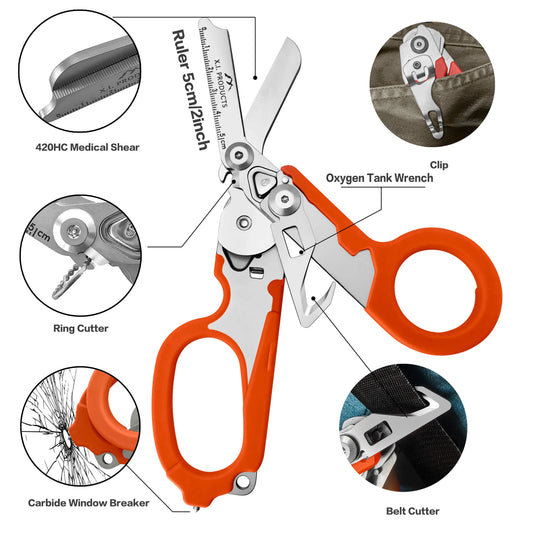
Standard trauma shears are non-negotiable in a kit bag. But on your off day, your back pocket, or your EDC loadout, you need something that folds closed, stays safe, and still cuts like the real thing when you need it. That's exactly what these foldable trauma shears deliver.
The folding design locks the blade safely away when closed — no exposed tip in a pocket, no loose shears rattling around a bag. Open them up and you get the same heavy-duty cut power: hardened stainless-steel blades, a serrated lower edge, and a blunt safety tip.
Raptor-tough performance. Not Raptor-priced. Built for anyone who needs serious cutting capability in a package that goes wherever they go.
Browse the full range below — single pairs, multi-packs, and color options available.
Why Foldable Matters for EDC
Traditional trauma shears are designed to live in a pouch, on a belt, or in a kit bag. The exposed blunt tip is safe for patient use, but it's not pocket-friendly — it snags, it shifts, and it's easy to lose in a bag without a dedicated holder.
Foldable trauma shears solve that. The blade folds into the handle like a pocket knife, making them genuinely pocketable and carry-safe. For off-duty medics, first-aid-conscious civilians, outdoor enthusiasts, and anyone who wants real emergency cutting capability without a dedicated pouch, the folding design changes the carry equation entirely.
Foldable vs. Standard Trauma Shears
| Foldable trauma shears | Standard trauma shears | |
|---|---|---|
| Pocket carry | ✅ Fully pocketable when folded | ❌ Requires pouch or holster |
| Cut performance | Heavy-duty — same blade steel | Heavy-duty |
| Deployment speed | One-hand flip open | Ready immediately from pouch |
| EDC suitability | ⭐⭐⭐⭐⭐ Excellent | ⭐⭐ Needs dedicated carry setup |
| Best for | Off-duty carry, EDC, backup kits, civilian first aid | Primary EMS kit, belt, tactical vest |
Who Carries Foldable Trauma Shears
- Off-duty medics and EMTs — want serious cutting capability without carrying a full kit on personal time.
- EDC users — replace or supplement a pocket knife with a tool explicitly designed for emergency patient care.
- Hikers and backcountry travellers — pack light but want real trauma-grade cutting in a trail first-aid kit.
- Tactical and preparedness users — carry as a backup to a primary kit or in a vehicle emergency bag.
- Civilian first-aiders — keep one in a car, backpack, or home kit for emergencies that need more than household scissors.
