
-
6-in-1 Foldable Trauma Shears (Black)
Regular price $34.99 USDRegular price$47.49 USDSale price $34.99 USDSale -
6-in-1 Foldable Trauma Shears (Carbon)
Regular price $39.99 USDRegular price$57.49 USDSale price $39.99 USDSale -
6-in-1 Foldable Trauma Shears - Carbon Black (Luminous)
Regular price $39.99 USDRegular price$57.49 USDSale price $39.99 USDSale -
6-in-1 Foldable Trauma Shears (Purple Luminous)
Regular price $39.99 USDRegular price$57.49 USDSale price $39.99 USDSold out -
6-in-1 Foldable Trauma Shears (Purple)
Regular price $34.99 USDRegular price$47.49 USDSale price $34.99 USDSale -
6-in-1 Foldable Trauma Shears (Orange and Black)
Regular price $34.99 USDRegular price$47.49 USDSale price $34.99 USDSold out -
6-in-1 Foldable Trauma Shears (Core Colors 4-Pack)
Regular price $117.99 USDRegular price$144.96 USDSale price $117.99 USDSale -
6-in-1 Foldable Trauma Shears (Purple Duo)
Regular price $63.99 USDRegular price$74.98 USDSale price $63.99 USDSale -
6-in-1 Foldable Trauma Shears (Carbon Duo)
Regular price $63.99 USDRegular price$74.98 USDSale price $63.99 USDSale -
6-in-1 Foldable Trauma Shears (Orange)
Regular price $34.99 USDRegular price$47.49 USDSale price $34.99 USDSale

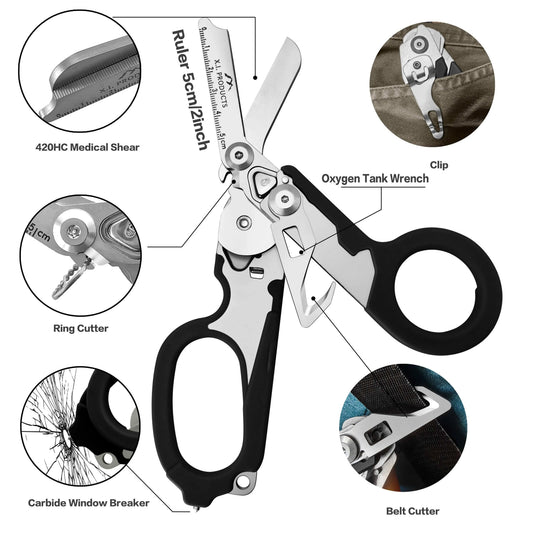

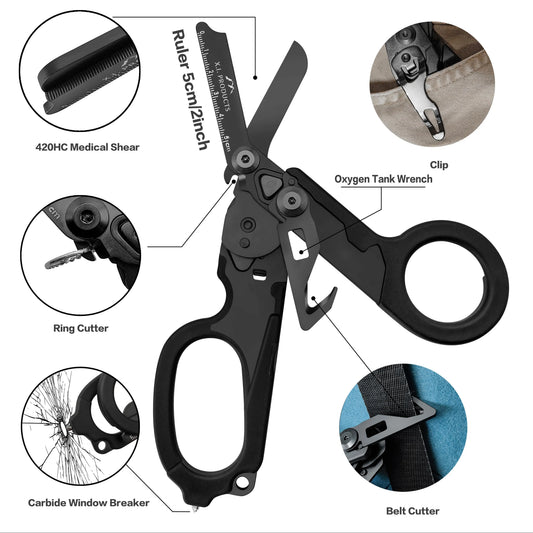

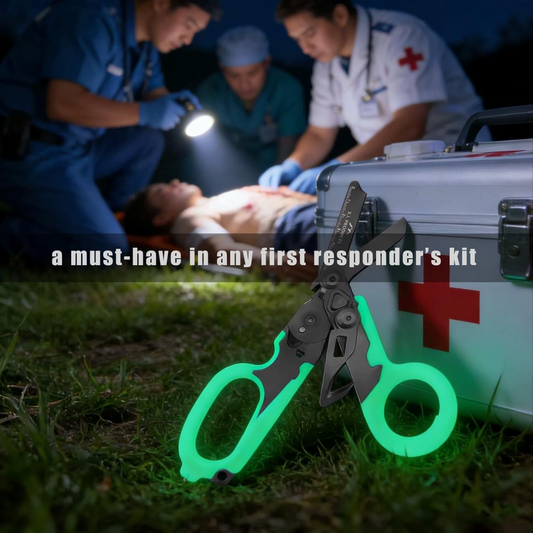

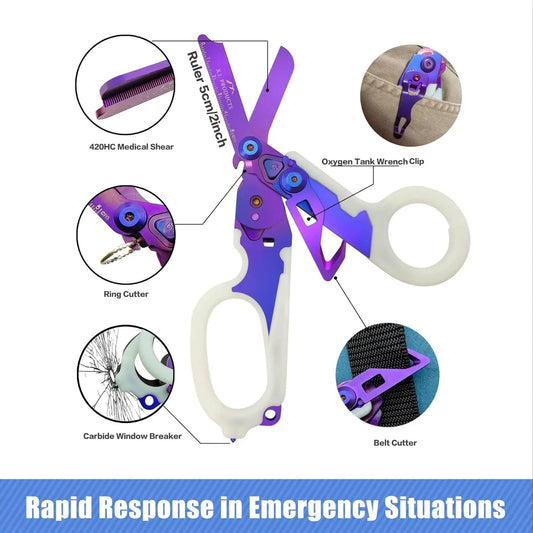


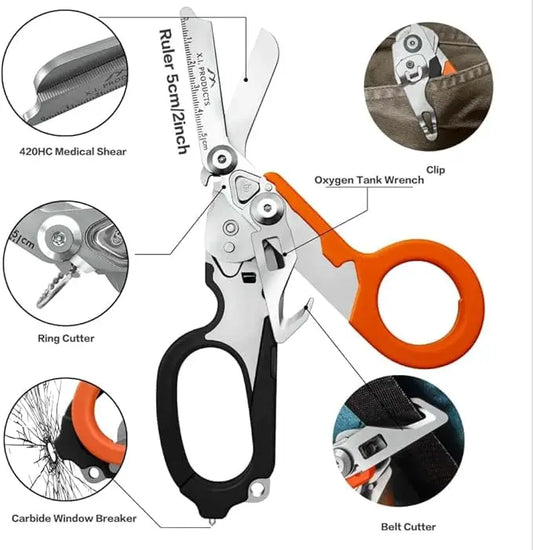


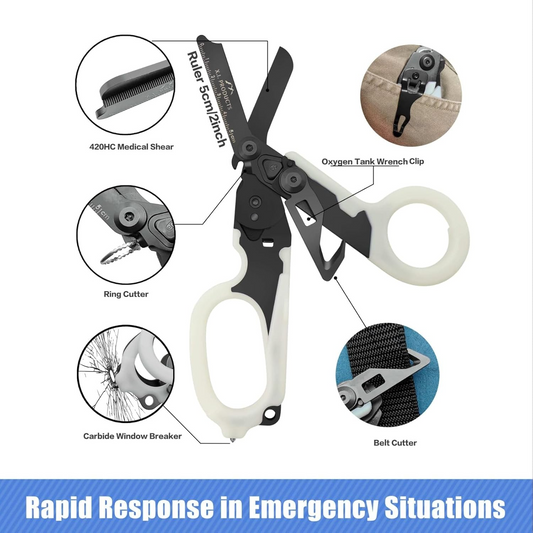

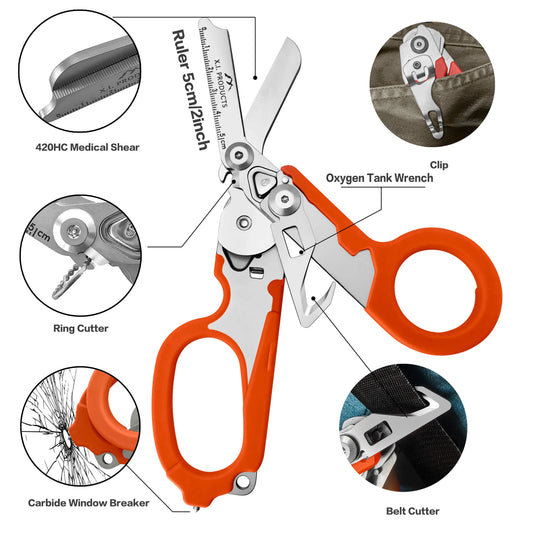
When you're on a call, your scissors aren't a backup plan — they're part of the plan. Our EMT and paramedic scissors are built around one idea: perform when it counts, hold up through the shift, and never give you a reason to reach for a different pair.
Every pair in this collection is field-grade from the start. Hardened stainless-steel blades, a serrated lower edge that bites instead of bounces, a blunt safety tip for working close to skin, and handles that don't slip when your gloves are wet. No compromises hidden behind the spec sheet.
Trusted by medics, firefighters, tactical crews, and ER staff — these are the scissors real responders carry, at a price point that doesn't punish you for needing a spare pair in every bag.
Browse the full collection below, or keep reading to find out exactly what separates field-grade scissors from everything else on the market.
Built for the Field, Not the Shelf
Most scissors are designed to look good in a product photo. Field-grade EMT scissors are designed to perform on the tenth call of a twelve-hour shift, with gloved hands, in bad lighting, on a patient who can't hold still. That's a completely different design brief.
What makes the difference in practice comes down to four things: blade steel that holds its edge under heavy use, a serrated lower blade that grips material instead of skating off it, a pivot that stays tight and smooth after repeated opening and closing, and a blunt tip that guides safely along skin without you having to slow down. If any of those four fail, the scissors fail.
Every pair in this collection is built to pass all four. That's the standard, and it's non-negotiable.
EMT Scissors vs. Paramedic Scissors — Same Tool, Two Names
There is no technical difference between EMT scissors and paramedic scissors. Both terms describe the same blunt-tipped, serrated, heavy-duty cutting tool used to remove clothing and gear in emergency care. The name changes based on who's searching — the tool does not.
| Term | Used by | Same as |
|---|---|---|
| EMT scissors | Emergency medical technicians, first-aid buyers | Paramedic scissors, trauma shears |
| Paramedic scissors | Paramedics, advanced EMS providers | EMT scissors, trauma shears |
| Trauma shears | All EMS, ER staff, tactical medics | EMT scissors, paramedic scissors |
| Medical scissors | General medical and clinical buyers | Depends on type — often the same tool |
Who Carries These
EMT and paramedic scissors are standard carry for anyone in emergency, tactical, or clinical roles where fast, safe cutting is part of the job.
- EMTs and paramedics — primary users; carried on belt or in kit for clothing removal and rapid patient access.
- Firefighters and rescue teams — used during extrication and trauma response alongside other cutting tools.
- ER and trauma nurses — cut clothing and bandages quickly and safely in fast-moving hospital environments.
- Tactical and military medics — carry compact versions as part of IFAK and combat medical loadouts.
- Wilderness and backcountry medics — rely on durable, lightweight scissors that perform far from backup.
What to Look For When Buying EMT Scissors
Not all scissors marketed as EMT or paramedic grade actually perform to that standard. Here's what separates the real thing from scissors just wearing the label.
| Feature | What to look for | Why it matters |
|---|---|---|
| Blade steel | Hardened stainless steel (not plated) | Holds edge under heavy or repeated use |
| Lower blade | Fine serrations, not smooth | Grips slick, wet, or layered fabric instead of skating |
| Tip design | True blunt safety tip | Slides under clothing along skin without cutting |
| Pivot | Tight, adjustable or riveted | Prevents blade wobble and ensures clean cuts |
| Handle | Non-slip grip, wide enough for gloved hands | Control under wet, bloody, or gloved conditions |
| Size | Standard (7.5") for main kit; compact/mini for backup | Match to your carry setup and kit space |
